




 Nederlands
 English
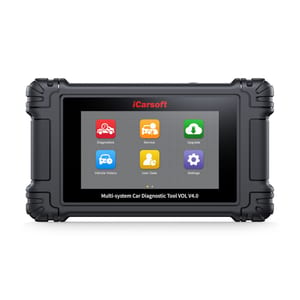
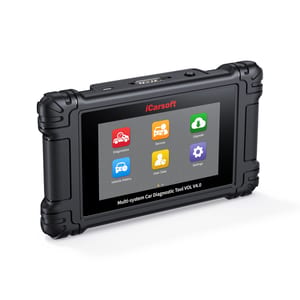
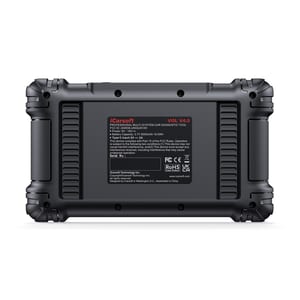
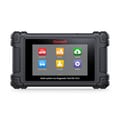
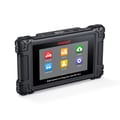
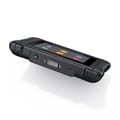
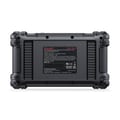
iCarsoft VOL V4.0 for Volvo and Saab
The iCarsoft VOL V4.0 is a dedicated diagnostic and service tool for Volvo and Saab. It performs all-system scans beyond basic OBD2, reads and clears fault codes, shows live data and freeze frame, and supports bi-directional actuation tests on supported modules. With AutoVIN identification, WiFi updating, and a touchscreen interface, it is built for accurate troubleshooting and maintenance tasks such as oil and service resets, EPB service mode, steering angle calibration, DPF regeneration, injector coding, ABS bleeding, air suspension service, and battery management functions where supported by the vehicle.
Mehr lesen






Haben Sie eine Frage zu diesem Produkt?
Unser Team ist bereit, alle Ihre Fragen zu beantworten.
FAQ Kontakt
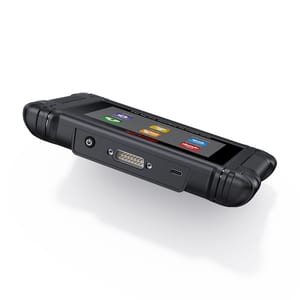
Volvo and Saab diagnostics are rarely “engine only”. A warning light can be triggered by a networked module, a calibration value, or a service routine that a generic OBD2 reader cannot access. The iCarsoft VOL V4.0 is built specifically for Volvo and Saab, combining all-system diagnostics with service and calibration functions, plus bi-directional tests on supported modules. It is designed for owners and workshops that want to diagnose accurately, confirm repairs with live data, and complete common maintenance procedures without guesswork. Product functions (technical) - Read and clear diagnostic trouble codes (DTCs) across supported control units - Display live data streams with real time monitoring - Capture and review freeze frame data for emissions related faults - Read ECU information for supported modules - Perform AutoVIN identification to retrieve vehicle information automatically - Run OBD2 test modes including I/M readiness, O2 monitor test, onboard monitor and EVAP system test (where supported) - Execute bi-directional actuation tests to command supported actuators for fault isolation - Reset oil and service intervals (service lamp, service mileage, service intervals) - Retract and reset electronic parking brake (EPB) for brake service (where supported) - Perform ABS bleeding routines to restore brake system performance after work (where supported) Eye-catching section 1: Volvo and Saab all-system diagnostics that goes beyond OBD2 If you are searching for a Volvo diagnostic scanner or Saab OBD tool, the key difference is module coverage. VOL V4.0 is intended to scan more than the engine ECU, including common systems such as ABS, airbag and transmission, plus additional supported modules depending on model and year. Use case: intermittent ABS and stability warnings A wheel speed sensor fault can be obvious, but a wiring issue or a module communication problem is not. With an all-system scan you can check which modules report the fault, read ECU information, and then use live data to compare wheel speed signals while driving at low speed. That workflow reduces parts swapping. Trade-off and limitation All-system coverage and special functions are vehicle dependent. Even within Volvo and Saab, the available modules and routines vary by platform, ECU version and model year. Use AutoVIN first, then check the module list the tool detects on your specific car. Internal link suggestion: If you are comparing tool types, see Carvitas guides on OBD scanner selection and “Auto uitlezen” basics. Eye-catching section 2: Service and maintenance routines for DIY and workshop work Many warning lights are not “faults” but maintenance states that require a correct reset or relearn. VOL V4.0 includes service functions commonly needed on Volvo and Saab, such as oil and service resets, EPB service mode, steering angle calibration (SAS), DPF regeneration, injector coding, ABS bleeding, air suspension service and battery management functions. Use case: brake pad replacement with EPB On vehicles with an electronic parking brake, forcing the calipers back mechanically can damage the mechanism. Using the EPB service routine retracts the calipers correctly, then you can complete the job and reset as required. Use case: diesel drivability and DPF issues For diesel models, DPF regeneration support can be a practical diagnostic step after repairs, combined with live data to confirm temperatures and sensor behavior. The important nuance is that regeneration should be used as part of a diagnosis, not as a shortcut for unresolved root causes such as boost leaks or faulty sensors. Trade-off and limitation Service routines can be safety critical. ABS bleeding and air suspension service should be performed only when you understand the procedure and the vehicle is in a safe condition. If the tool does not offer a routine on your model, it is usually because the ECU does not support it through this interface. Internal link suggestion: For maintenance focused tools, browse Carvitas sections on “Service en Onderhoud”, “Oliereset”, and “Elektrische Handrem”. Eye-catching section 3: Bi-directional tests and live data for faster fault isolation Bi-directional control is what turns a scanner into a diagnostic instrument. Instead of only reading data, you can command supported components and observe the response. This is especially useful when a fault is intermittent or when you need to confirm whether a problem is electrical, mechanical, or control related. Use case: confirming a suspected fuel pump issue If a vehicle has a no start or low pressure symptom, an actuation test can help confirm whether the pump responds to a command. Pair that with live data to see whether pressure related parameters change as expected. Use case: throttle and idle related complaints When a throttle body has been cleaned or replaced, an electronic throttle control relearn can be required on supported vehicles. Live data helps you verify that throttle angle and idle control behave correctly after the procedure. Trade-off and limitation Not every module supports actuation tests, and not every actuator is safe to command in every situation. Always run tests with the vehicle secured and follow workshop safety practice. Eye-catching section 4: Hardware, updates and what to check before you connect VOL V4.0 is a touchscreen diagnostic device with WiFi updating and USB connectivity. It supports OBD2 and manufacturer specific diagnostics for Volvo and Saab, and it can download two additional vehicle makes free of charge. Before purchase, match the tool to your use case If you mainly want to clear an engine light, a basic OBD2 reader can do that. If you want to diagnose ABS and airbag faults, perform EPB service mode, run ABS bleeding, or do battery registration and other service routines, a dedicated Volvo and Saab tool like this is the more appropriate choice. Specifications
| Item | Specification |
|---|---|
| Operating system | Android |
| Processor | Quad Core 1.3 GHz |
| Memory | 32GB |
| Display | 5-inch LCD capacitive touchscreen (854x480) |
| Connectivity | USB 2.0, Wi-Fi (2.4GHz), OBDII |
| Power input | 9-18V |
| Battery | 3.7V 5000mAh (tested around 6 hours continuous use) |
Supported protocols (high level) The device supports modern and legacy OBD communication including CAN, CAN-FD, ISO 9141 and J1850 variants. Protocol support does not guarantee every function on every vehicle, but it helps with broad coverage across model years. FAQ
Vorteile und Nachteile
- All-system diagnostics for Volvo and Saab, not just generic OBD2 engine codes
- Bi-directional actuation tests help confirm faults instead of guessing
- Includes key service routines such as oil reset, EPB service mode and ABS bleeding (vehicle dependent)
- AutoVIN identification speeds up correct vehicle selection and reduces input errors
- WiFi updating keeps the tool current without needing a PC for updates
- Service and special functions vary by model year and ECU, so not every routine is available on every vehicle
- Bi-directional tests and calibration routines require careful use and workshop safety practices
- Two additional vehicle makes are downloadable, but details of supported brands and functions must be checked before relying on it for non Volvo or Saab work
Wird oft zusammen gekauft mit...
Zusammenfassung der Specs
- Geeignet für Automarken Saab, Volvo
- Geräteeigenschaften Eingebaute Batterie, Kostenlose Updates, Touchscreen, Handheld, Aktualisierungen, WIFi-Verbindung
- Eigenschaften ABS, Batterie-Codierung, Steuerung von Aktuatoren, Airbag, Prüfung von Bauteilen, Elektronische Parkbremse betätigen, Löschen von Fehlercodes, Freeze frame, Teach in Drosselklappe, Codierung der Einspritzdüse, Lambdasonde / o2-Sonden, Live-Daten, Motordiagnose, Zurücksetzen des Motormanagements, Ölrückstellung, Rückstellung der Bremsbeläge, DPF-Regeneration, Scantool, Service reset, Lenkwinkelsensor kalibrieren, Getrieb
- Protokoll CAN, EOBD, ISO 9141, J1850 PWM, J1850 VPW, K-Line, OBD2, CAN-FD